
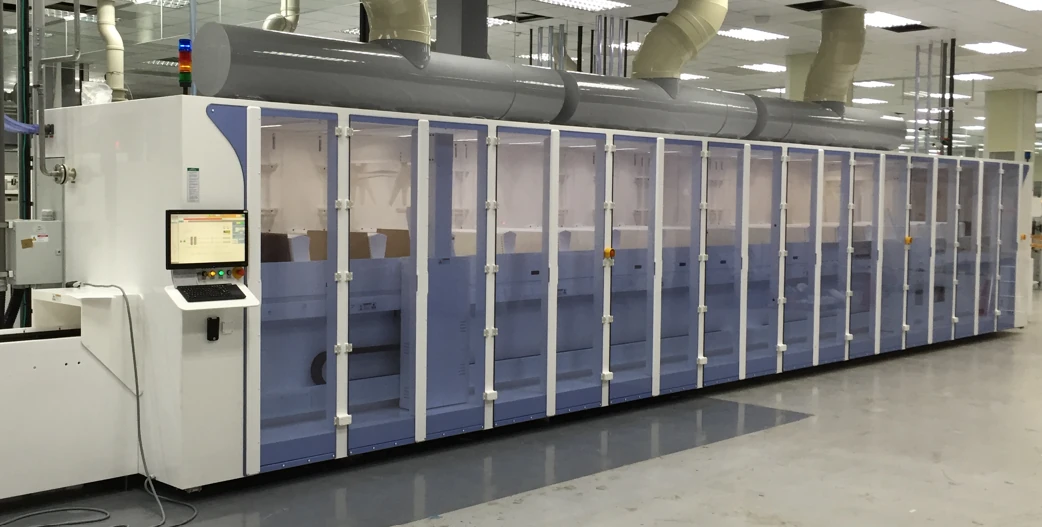
Automatic texturing equipment from exateq’s early Taiwan project, 2015.
A distinctive beginning
2015 was exateq’s founding year. That same year, two fully automatic wet benches for texturing silicon wafers were delivered to a customer in Taiwan. The systems were intended for industrial photovoltaic production.
For the young company, this project marked an early step into international markets. Expectations for process stability, reproducible results and reliable automation were high. Delivery alone was therefore only part of the task.
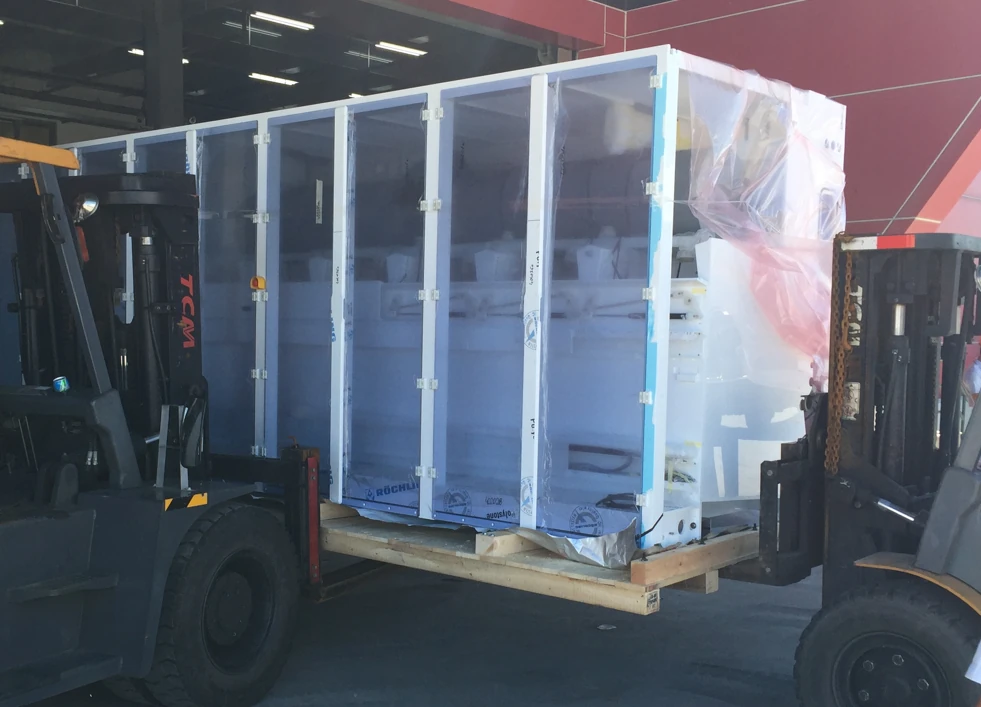
Equipment transport in the founding year 2015 – an early step into international markets.
Alkaline texturing during a technological transition
Wet chemical texturing is an important step in manufacturing crystalline silicon solar cells. Alkaline texturing of suitably oriented monocrystalline silicon wafers creates microscopic pyramid structures that reduce light reflection.
The two systems used potassium hydroxide (KOH). Special texturing additives were already available in 2015, but confidence in this process chemistry was not yet established everywhere. The systems were therefore also equipped with isopropyl alcohol (IPA) supply lines, keeping an established process approach available.
This detail illustrates the technological transition at the time: alongside the texturing process itself, the equipment had to accommodate different chemical process variants.
Several weeks in Taiwan – on-site commissioning
Following delivery, exateq employees travelled to Taiwan to commission both systems at the customer’s site. The team spent several weeks there, supporting the start-up of the automated texturing processes under real production conditions.
This phase highlighted the interaction between mechanical design, control technology and an understanding of wet chemical processes. Commissioning equipment on another continent was a significant step for the young company.
Two systems in direct competition
Alongside the two exateq systems, the customer was installing another system from an established manufacturer. That supplier was pursuing a new equipment concept, allowing different technical approaches to be observed under comparable conditions.
While the competing system was still not achieving the desired results, both exateq systems were already producing well-textured wafers – according to the recollections of the project team, considerably earlier than the system being installed in parallel.
For the team, this confirmed their chosen technical approach: what matters is how reliably a process can be implemented in production.
From the first systems to the later qRUN platform
The two systems delivered in 2015 represented early steps in the development of exateq’s automatic wet benches. The qRUN platform name was introduced only later.
Since then, the portfolio has expanded to include further equipment concepts and applications, from photovoltaics and semiconductors to large-format substrates. Experience from early projects forms part of this development.
A lasting milestone
The two wet benches delivered to Taiwan were more than an export order in the founding year. They represent international project work, several weeks at the customer’s site and the ability to bring complex wet chemical processes into industrial practice.
To this day, exateq aims to develop carefully engineered systems that work reliably in everyday production.
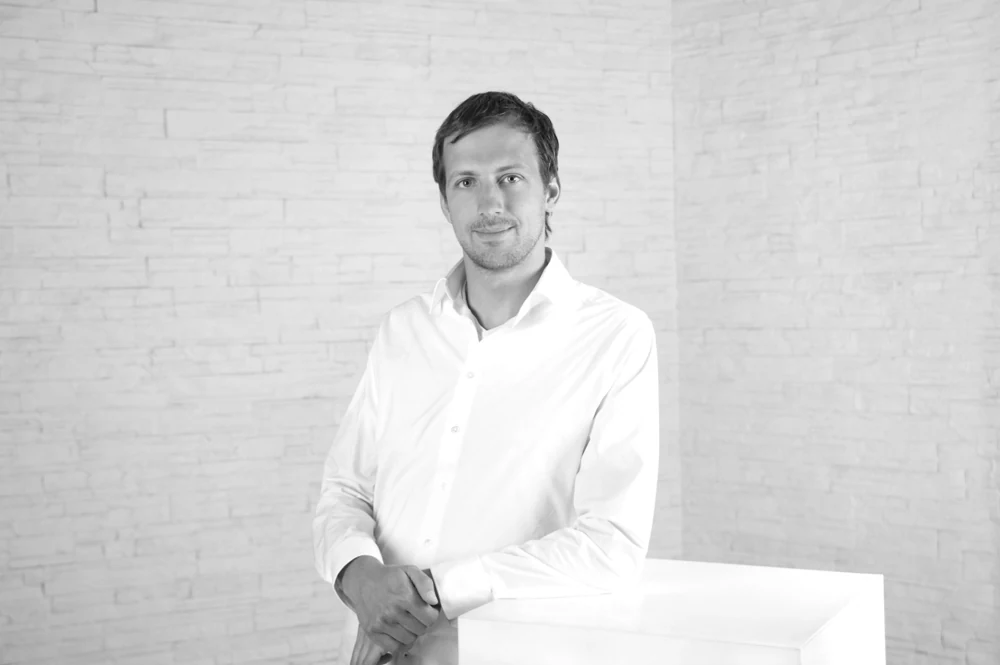
Florian Süß
Project management & sales | exateq GmbH
Florian Süß has many years of experience in project management and the design of wet chemical equipment. Since exateq was founded in 2015, he has contributed his expertise to practical, customer-specific solutions for high-tech industries.
More articles by this author ↗